
Share This On


Asia Pacific Food Encapsulation Market – Size, Outlook, Trends and Forecast (2024 – 2032)
Report ID
#6381
Report Type
Regional
Study Period
2018 - 2035
Base Year
2025
Expected CAGR
7%
Food encapsulation technology helps in helpful food ingredients to permit flavour retention, and take away unhealthy taste from the food. With the assistance of food encapsulation, food and beverages trade tried to beat challenges adore maintaining the style, colour and nutrition of the product and preservation of the product encapsulation involve the incorporation of food ingredients, enzymes, cells or alternative materials in little capsules is known as food encapsulation. Encapsulation is a vital tool for up the delivery of living cells and bioactive molecules into foods. food-grade, perishable materials should be used for planning the protecting shell of encapsulates and that they should be economical in forming a barrier between the interior section and its surroundings. Food encapsulation technology helps in stabilising food ingredients. Food encapsulation is a process of storing the food ingredients in a little amount into the capsules is known as food encapsulation.
Asia Pacific Food Encapsulation Market Size & Growth:
Asia Pacific food encapsulation market is estimated to be $ XX billion and predicted to rise to $ XX billion with a CAGR of 6.72%. Increasing health consciousness is anticipated to be a severe issue driving world food encapsulation market growth. Food encapsulation technology helps in helpful food ingredients to permit flavour retention, and take away the bad taste from the food. With the help of food encapsulation, food and beverages trade tried to beat challenges such as maintaining taste, colour and nutrition of the product and the preservation of the product. Drivers for food encapsulation are increasing consumption of functional foods and also growing demand for convenience foods for the increase of novel goods with natural flavours and clean label. Restraints & challenges for food encapsulation are high costs delay mass commercialisation, and the significant role is played by the technology where the technological growths yet to find grip. And also stability should be there during processing and packing. Opportunities that are capturing in food encapsulation are the development of advanced technologies to tap trading markets. And also reducing capsule size and increasing bioavailability. This we can reduce the process by the multi-component delivery system.
Asia Pacific Food Encapsulation Market
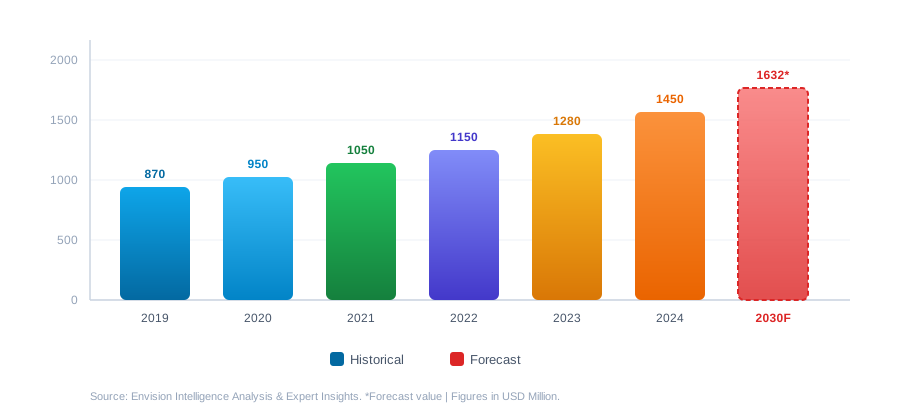
Expected CAGR
~7.6%
2026-2035
Asia Pacific Food Encapsulation Market Share:
The significant factors that attribute to the expansion of the market are due to technical advancements and social control of recent applications in a food processor and encapsulation procedures which can enhance the world food encapsulation market grow speedily throughout the forecast amount. One of the foremost necessary reasons for encapsulation of active ingredients is to produce improved stability in final product during the process. By technology type, Asia Pacific food encapsulation market can be segmented into microencapsulation, Nanoencapsulation and hybrid technologies. Food encapsulation technologies such as microencapsulation and Nano encapsulation have improved the food encapsulation industry due to the need for capsules to be filled with tiny particles. By Applications for this technique have increased in the food industry since the encapsulated materials can be protected from moisture, heat or other extreme conditions, thus enhancing their stability and maintaining viability. Food encapsulation techniques help to beat a number of the foremost challenges equivalent to maintaining taste, colour, preservation, and nutrition of the trade. Health aware consumer’s demand for, tasty, nutrient wealthy product and healthy food which might solely meet by food encapsulation. Increasing demand for prepackaged food is anticipated to fuel the expansion of worldwide food encapsulation market. Significant players dominating the Food Encapsulation market are Cargill, Incorporated, Friesland Campina Kiewit, Royal DSM, Kerry Group, Ingredion Incorporated, Firmenich Inc., Lycored Ltd., International Flavors and Fragrances, Symrise AG, Sensient Technologies, Balchem Corporation, National Enzyme Company, and Aveka Group. By geography, the Asia-Pacific food encapsulation market is analysed under various regions namely China, India, Japan, South Korea, Australia. Countries such as China and India are predicted to drive market growth for the Asia Pacific due to rising living standard and growing processed food industry.
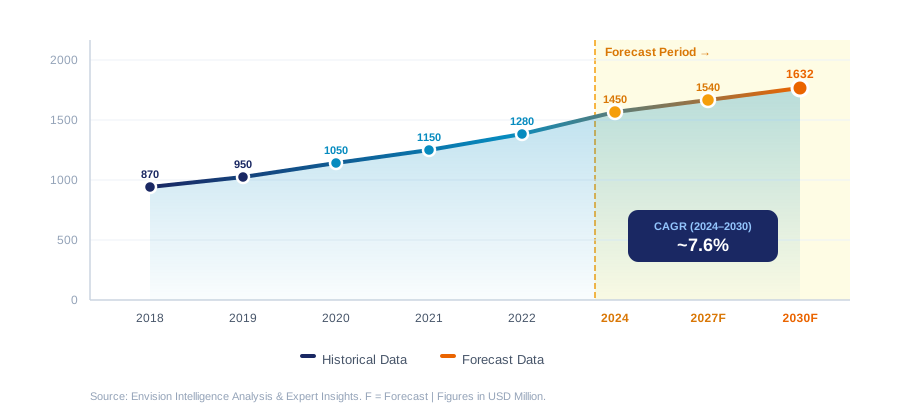
Asia Pacific Food Encapsulation Market Trends:
Asia Pacific Food Encapsulation Market
Asia Pacific Food Encapsulation Market Research Report:
Along with these companies, there were many other companies considered/ cited in the report while analysing the food encapsulation market. These companies hold substantial share-owning to the nature of the industry whereas the rest of the market shares are marginal chunks to regional and local level manufacturers. Other players have considerable presence owing to its robust brand image, geographical reach and stable customer base.
Asia Pacific Food Encapsulation Market
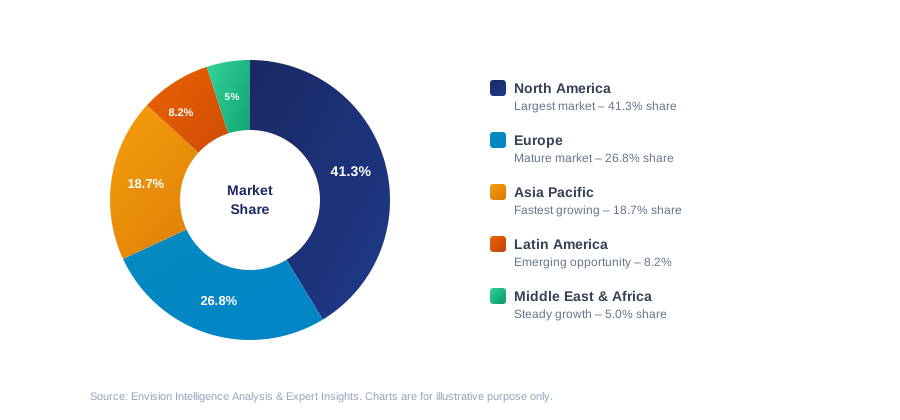
Market Size Available | 2018 - 2035 |
Base Year | 2025 |
Forecast Period | 2026-2035 |
Historical Period | 2018-2025 |
Segments Analysed | By Type, Application, and Region |
Analyses Covered | Global, Regional & Country Level; Segment Analysis; Drivers, Restraints, Opportunities, Challenges; PESTLE; Porter's Five Forces; Competitive Landscape |
Regions Covered | North America · Europe · Asia Pacific · Latin America · Middle East & Africa |
Report Formats | Extensive Report (350 pages) | Snapshot Report (85 pages) |








Starting from $2700

Starting from $2160

Starting from $2700
Keep up-to-date with our weekly newsletter, Media Pulse.

Data-driven market insights & solutions


