
Share This On


Asia Pacific Pet Food Market – Size, Outlook, Trends and Forecast (2024 – 2032)
Report ID
#4892
Report Type
Regional
Study Period
2018 - 2035
Base Year
2025
Expected CAGR
7%
Worldwide changes in socio-cultural aspects, inclination in the humanisation of animals enhanced the potential for APAC regions pet food market. Pet food market generally refers to plant or animal material consumed by a pet, which differs according to pet type.
Asia-Pacific Pet Food Market Segments Size & Growth:
The Asia-Pacific pet food market is projected to grow $12.48 Billion by 2024 at a CAGR of 3.28% from $9.815 Billion in 2017. The factors influencing the market growth mainly involves increasing awareness of consumers towards pet health, Rising trend of nuclear families and adoption of more number of pets, rapid humanisation of pets and need of healthy food for pets.
Asia-Pacific Pet Food Market Segments Share:
The Asia-Pacific pet food market is classified based on pet type, product type, ingredient type, sales channel, pricing, and geography. Based on pet type, Pet food market is categorised into cats, dogs, birds, fish, and others. Among these types of pets, dogs are the fastest growing and mostly adopted pets as there is a rising trend for nuclear families and inclination towards companionship and security. Based on product type, Pet food market is categorised as dry pet food, wet/canned pet food, Treats & snacks, veterinary pet food, Organic and others. Dog food unusually dry food is expected to grow with dominance while cats prefer wet food. All these are having their pros and cons according to the pet type and type of product. Based on Ingredients, Pet food market is classified as animal delivered, plant delivered and others where these ingredient types have significant usage according to the type of product. Based on sales channel, Pet food market is into specialised pet shops, internet sales, grocery retailers that includes, a modern grocery retailer, supermarkets, department stores, warehouse clubs and others. Pricing is bifurcated into economic, premium and super premium segment.
Asia Pacific Pet Food Market
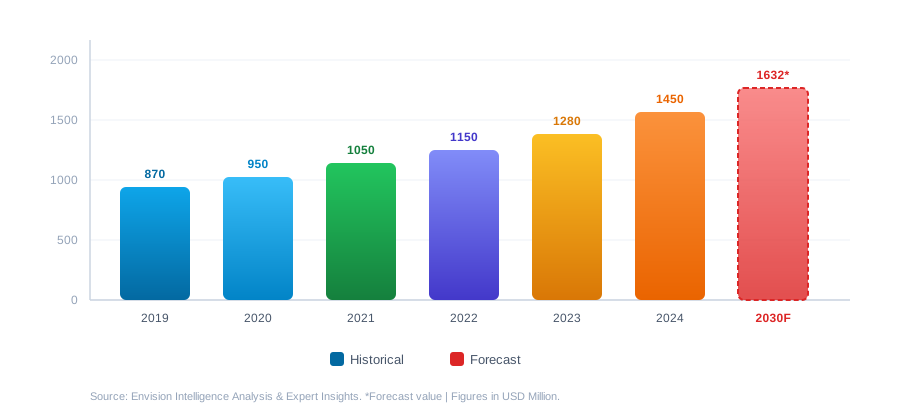
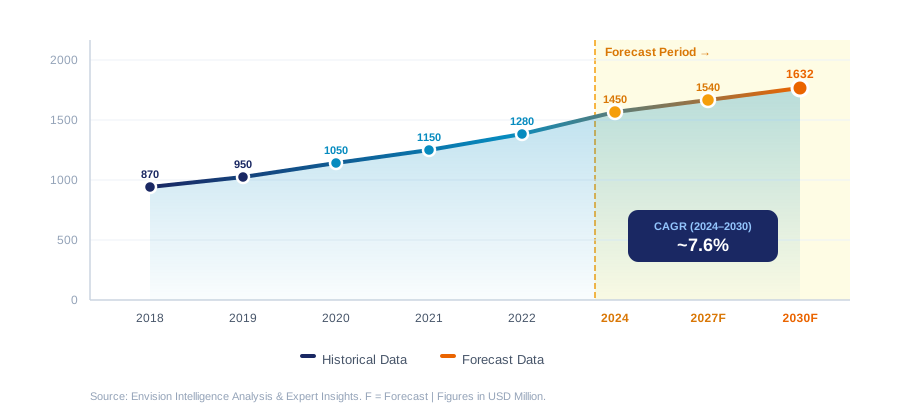
Expected CAGR
~7.6%
2026-2035
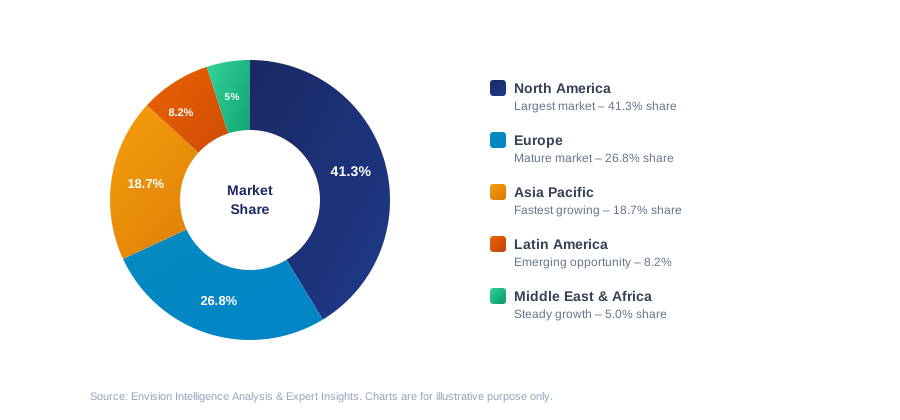
Geographically, Asia-Pacific is segmented into China, Japan, India, and others. APAC is the fastest growing market owing to the increasing number of nuclear families, and rising standards of living and Japan is expected to grow with a CAGR of around 6.9% during the forecast 2018-2024.
Asia-Pacific Pet Food Market Trends:
Asia-Pacific Pet Food Market Research Report includes:
An executive summary condensing the whole report such that essential authority can rapidly twist up doubtlessly acquainted with brief overview and conclusion.
To have complete market analysis, industry value chain analysis, Porter’s Five Force Analysis, PESTLE, SWOT analysis, and Y-o-Y analysis were carried to understand the market more comprehensively.
Asia Pacific Pet Food Market
Regional and global diversity is analysed with the major countries and the unions. Scrutinizing the revenue generation on Year-On-Year
Identifying DROC in the current market and their impact in altering the market dynamics.
Competitive landscape analysis to identify the mergers and acquisitions, which will have a comparative financial study with significant competitors.
Expertise investment opportunities by an analyst to the individual and organisation to have a better foothold in the market.
The major market players are
Asia Pacific Pet Food Market
Market Size Available | 2018 - 2035 |
Base Year | 2025 |
Forecast Period | 2026-2035 |
Historical Period | 2018-2025 |
Segments Analysed | By Type, Application, and Region |
Analyses Covered | Global, Regional & Country Level; Segment Analysis; Drivers, Restraints, Opportunities, Challenges; PESTLE; Porter's Five Forces; Competitive Landscape |
Regions Covered | North America · Europe · Asia Pacific · Latin America · Middle East & Africa |
Report Formats | Extensive Report (350 pages) | Snapshot Report (85 pages) |








Starting from $2700

Starting from $2160

Starting from $2700
Keep up-to-date with our weekly newsletter, Media Pulse.

Data-driven market insights & solutions


