
Share This On


Global Automatic Identification System Market – Size, Outlook, Trends and Forecast (2024 – 2032)
Report ID
#6641
Report Type
Global
Study Period
2018 - 2035
Base Year
2025
Expected CAGR
7%
AIS is the unique tracking system which functions automatically and is applied in restricting the collision of ships by vessel traffic services. The information which is provided by the supplements radar is the primary method used in the avoiding collision in the water transport. AIS equipment is generally used to track and monitor vessel movements. Information provided by the AIS includes speed, course, identification and position which is displayed on the screen. Operations in the VHF maritime band are performed through the broadcast transponder system. This automatic system integrates standardised transceiver with a positioning system such as GPS that includes gyrocompass or rate of turn indicator. The vessels which are fitted with transceivers are easily tracked by the AIS systems which are located on the coastal line. When these are out of range, the satellites fitted with AIS receivers are capable of a deconflicting large number of signatures. In the case of AIS being switched off or not fitted correctly, there will be no information exchange. AIS should be switched on all the times except for the emergency reasons. The working mode of AIS is generally continuous and autonomous owing to the security issues.
Global Automatic Identification System Market Size:
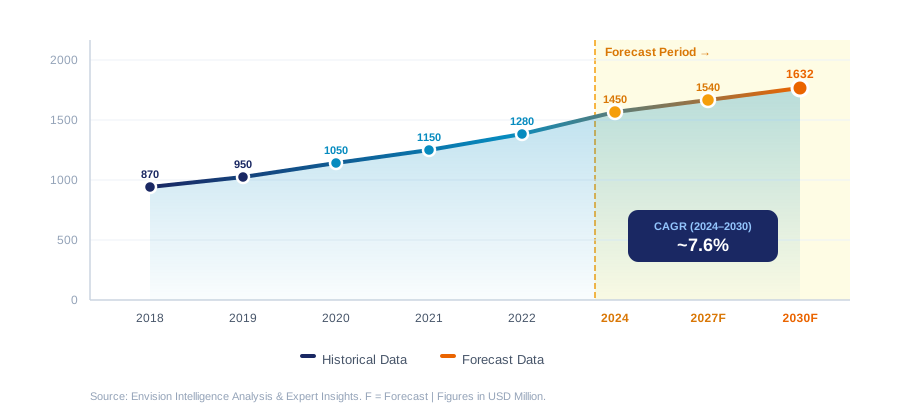
Global Automatic Identification market is poised to reach the value of $244.40 million in 2024 from $180.2 million in 2017, growing with the CAGR of 4.45%. Key points like better navigation and maritime traffic management, enhanced coastal surveillance, improvement in monitoring the movements of other vehicles and quick and accurate information about collisions when used with dynamic data are driving the market growth. Whereas the facts like range and reporting capabilities, wrong equipment settings and data manipulation practices and fishing vessels cannot be fitted with AIS are hampering the market growth. The market has opportunities like increasing government involvement and growth in security concerns associated with monitoring vessels are creating a chance for the market to explore in all the regions.
Global Automatic Identification System Market
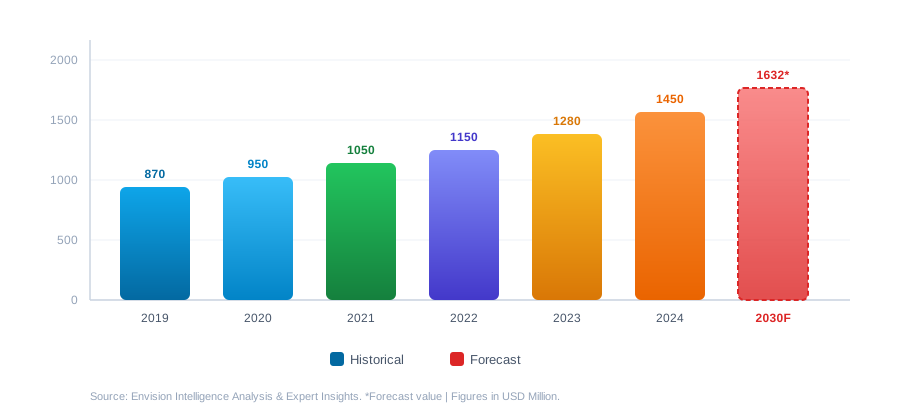
Expected CAGR
~7.6%
2026-2035
Global Automatic Identification System Market Share:
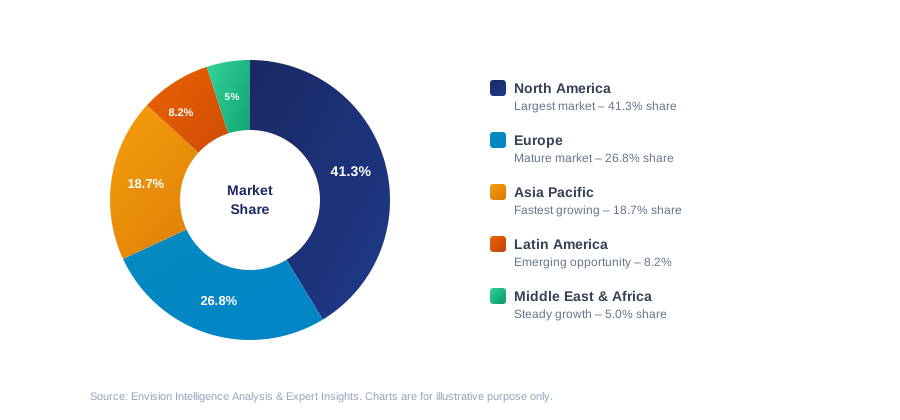
The market is segmented as by class, by platform, by application and by geography. By class, the market is classified into class A, class B and AIS base stations. Class A segment dominates the market owing to the increasing number of vehicles in operations and demand for class A AIS devices. Class B and AIS base stations are promising segments. By platform, the market is segmented into vessel-based and on-shore based. Vessel-based is the largest segment due to the higher adoption rate, and the on-shore segment is the fastest growing segment owing to the usage in predominant applications of the marine fleet. By application, the market is classified into fleet management, vessels tracking, maritime security and others. Vessel tracking segment is the large market as well as fastest growing due to the large range incorporation of AIS systems in the vessel tracking. By geography, the market is classified into APAC, North America, South America, Europe and Middle East & Africa regions. North America is expected to hold the largest market share is owing to the dependence on water transport between domestic regions as well as for cross-border trade along with the security breaches in the sea-based borders are factors driving the market in this region. Europe is the largest market next to North America. APAC is the fastest growing region owing to border based security reasons along with the growth of cross-border trade with the help of water-based transport are some key drivers for this region. South Korea is one such country that is entirely landlocked and thus has to depend on water transport for trade purposes further boosting the demand for AIS. South America and Middle East & Africa are promising markets in the regard of Radar Systems market.
Global Automatic Identification System Market Trends:
Global Automatic Identification System Market
Global Automatic Identification System Market Research Reports Includes:
Along with these companies, there were many other companies are considered in the report while analysing the Global Automatic Identification System market. These companies hold substantial share-owning to the nature of the industry whereas the rest of the market shares are marginal chunks to regional and local level manufacturers. Other players have considerable presence owing to its robust brand image, geographical reach and stable customer base.
Global Automatic Identification System Market
Market Size Available | 2018 - 2035 |
Base Year | 2025 |
Forecast Period | 2026-2035 |
Historical Period | 2018-2025 |
Segments Analysed | By Type, Application, and Region |
Analyses Covered | Global, Regional & Country Level; Segment Analysis; Drivers, Restraints, Opportunities, Challenges; PESTLE; Porter's Five Forces; Competitive Landscape |
Regions Covered | North America · Europe · Asia Pacific · Latin America · Middle East & Africa |
Report Formats | Extensive Report (350 pages) | Snapshot Report (85 pages) |








Starting from $2700

Starting from $2160

Starting from $2700
Keep up-to-date with our weekly newsletter, Media Pulse.

Data-driven market insights & solutions


