
Share This On


North America Robotics Market – Size, Outlook, Trends and Forecast (2024 – 2032)
Report ID
#6501
Report Type
Regional
Study Period
2018 - 2035
Base Year
2025
Expected CAGR
7%
Robots resemble the human body and work faster than humans which act as machines. We cannot merely just as machines because robots perform on its own without any interferences. Artificial intelligence is as same as robotics, but slight difference is a robot does not require programming all the time until it gets it first programming way and set of instructions. The robot is referred to as the electro-mechanical device because it performs software and hardware operations.
North America Robotics Market Size & Growth:
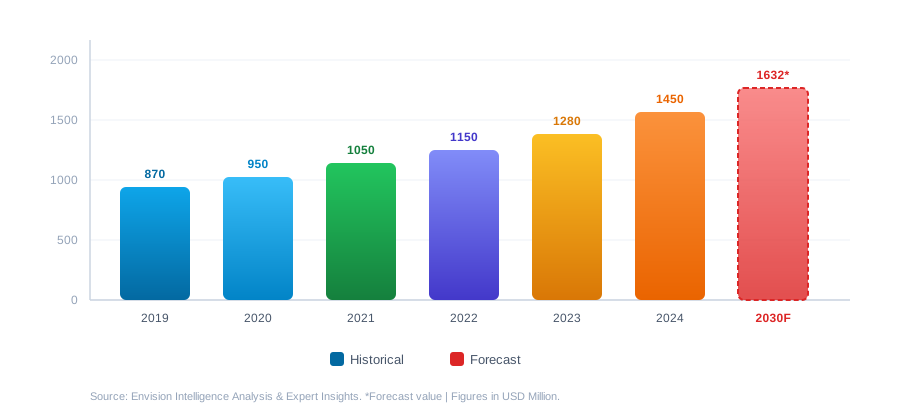
Robots are movable, and transport data with ease in the manner of computer data transforms. Increase in automation process of industries, looking forward to machines which replace the human work, less investment of time due to an increase of capable machines are driving the global market size. This market stood at $xx Billion during 2017, and regarding CAGR it is projected to the growth of xx % and will reach $XX billion by 2025.
The growth in the market is attributed to the growing of capable machines with advanced technology from the involvement of all type of engineers. Robots provide work efficiency for within a short span of time which makes consumers to but investment and cost makes consumers aware of using machines. Reduction of cost, only applicable to critical situations keeps people in the prospective manner of thinking, and healthy condition will drive the global robotic market growth in the forecast period.
North America Robotics Market
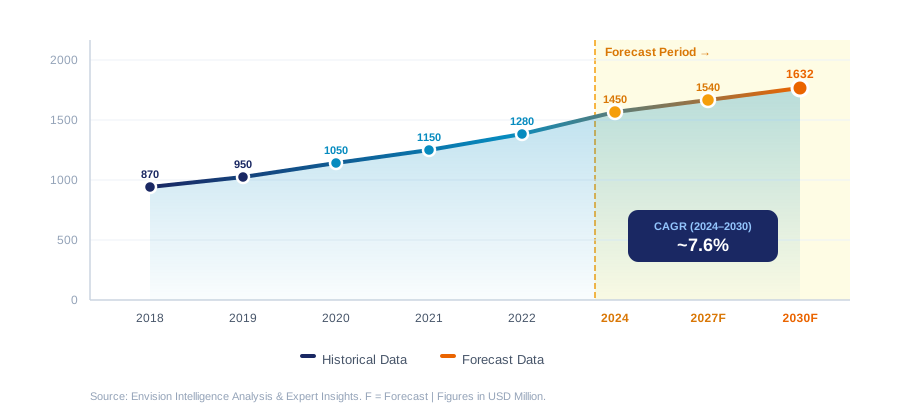
Expected CAGR
~7.6%
2026-2035
North America Robotics Market Share:
Robotics market is segmented into by type, by components, by the application. By type, the market is segmented into mobile robotics, static robotics & others. Mobile robots are controlled by software implemented by using sensors to identify their surroundings. These mobile robots are movable which is capable of the locomotive, and North America is a significant driving market in mobile robotics.
Regarding components type, the market is segmented into sensors, actuators, vision system, control unit, brake system & others. All these components are preferable to form a robot or machine where sensors are minimised from its original size with higher efficiency data. Due to its size, it is possible to place in a hazard environment which is driving the market growth.
Concerning application, the market is categorised into automotive, electronic, agriculture, military &defense, medical & healthcare. Automotive and electronic sectors are consuming robotic goods because for rapid urbanisation these two sectors act pillars. So this makes investors prefer the robotic technology in this digitalised world.
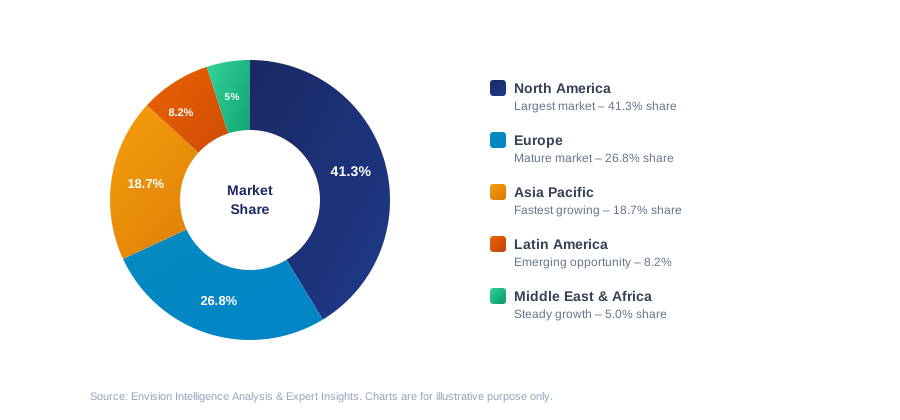
Regarding geography, the North America market is classified into US, Canada, Mexico. In North America, industry growth is more in the U.S also expected to dominate the market during the forecast period. The US prefers not only for electronic and automation but also agriculture with robotic machines. The US is well known as a smart city because of its fully fledged digital infrastructure also well-developed research centres on robots with huge investments are boosting the market growth.
North America Robotics Market
North America Robotics Market Trends:
North America Robotics Market Research Report:
North America Robotics Market
Market Size Available | 2018 - 2035 |
Base Year | 2025 |
Forecast Period | 2026-2035 |
Historical Period | 2018-2025 |
Segments Analysed | By Type, Application, and Region |
Analyses Covered | Global, Regional & Country Level; Segment Analysis; Drivers, Restraints, Opportunities, Challenges; PESTLE; Porter's Five Forces; Competitive Landscape |
Regions Covered | North America · Europe · Asia Pacific · Latin America · Middle East & Africa |
Report Formats | Extensive Report (350 pages) | Snapshot Report (85 pages) |








Starting from $2700

Starting from $2160

Starting from $2700
Keep up-to-date with our weekly newsletter, Media Pulse.

Data-driven market insights & solutions


