
Share This On


South America Cardiovascular Devices Market – Size, Trends and Forecast (2024 – 2032)
Report ID
#5744
Report Type
Regional
Study Period
2018 - 2035
Base Year
2025
Expected CAGR
7%
Cardiovascular devices are designed to treat cardiovascular ailments, which are related to heart, and some other health problems. The major cardiovascular diseases occurred rapidly are congestive heart failure, ischemic stroke, and sudden cardiac attacks. Defibrillators which come under cardiac rhythm management devices are used as an emergency life-saving devices with the advent of sudden cardiac attacks. To treat and to beat these issues cardiovascular devices are implemented.
South America Cardiovascular Devices Market Segments Size & Growth:
South America Cardiovascular devices market is projected to reach approximately USD XX Billion by 2024, at a CAGR of XX% from XX Billion in 2017 during the forecast period. The key attributes promoting the South America cardiovascular devices market growth are growing geriatric population, high preference of minimally invasive procedures, and rising prevalence of cardiovascular disease. Technical innovations and advancements in the cardiovascular devices have made a major impact on the South America cardiovascular devices market. Cardiovascular disease is the major cause of all the deaths. To reduce the time to hemostasis, to enable early ambulation, and to improve patient comfort these medical devices are implemented. Cardiac monitoring refers to the continuous monitoring of the heart activity and has to make an assessment relative to the patient’s cardiac rhythm. It generally includes electrocardiography. By considering the reports of World Health Organization 19 Million people across the globe are died in 2012, due to CVD (Cardiovascular Disease), and around 21 Million people are estimated to die by 2024. In India, nearly 32 million people have cardiac problems. These emerging economies are exhibiting a strong potential accounted with the developing healthcare infrastructure, and others. Growing prevalence of cardiovascular diseases, augmenting geriatric population, and obese population is also the factors contributing to the cardiovascular diagnostic and monitoring devices market, which holds the largest market share across the globe. Historically, the FDA and doctors have recommended that pacemaker patients should not undergo an MRI (Magnetic Resource Imaging). Traditional pacemakers are not compatible with MRI, due to the harmful interaction between the device and the electromagnetic field.
South America Cardiovascular Devices Market Segments Share:
South America Cardiovascular Devices Market is segmented by product type which comprises of Cardiac Rhythm Management (CRM), Cardiac Monitoring Devices, Cardiac Surgery Devices, interventional cardiology, peripheral vascular devices, plaque modification devices, and flow alteration devices. External defibrillators can be used as emergency life-saving, with the advent of the sudden heart attack. Rising incidence of sudden heart attacks is propelling the market growth for CRM devices in the United States. Due to saturation of pacemakers implementation will witness a slight decline in the overall CRM devices market share. By procedure, the market is segmented into minimally invasive heart surgery, open heart surgery, heart valve repair or replacement, and angioplasty. By technology, the market is further classified into cardiopulmonary bypass products, bioresorbable stents, and cardiac assist devices. By end-users and applications, the market is further divided into segments. By application cardiac arrhythmia held the highest market share owing to the high prevalence of cardiac arrhythmia. By Geography, in South American countries Brazil is witnessed to grow rapidly, owing to the increasing awareness about heart diseases, and growing number of aged people.
South America Cardiovascular Devices Market Trends:
South America Cardiovascular Devices Market Research Report:
South America Cardiovascular Devices Market
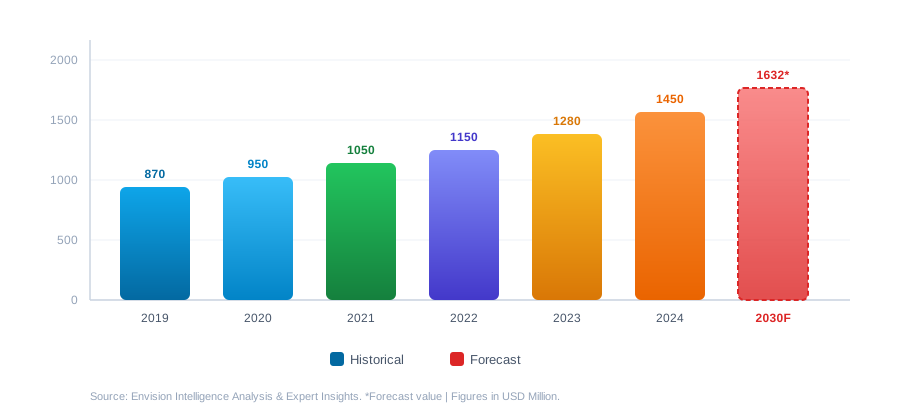
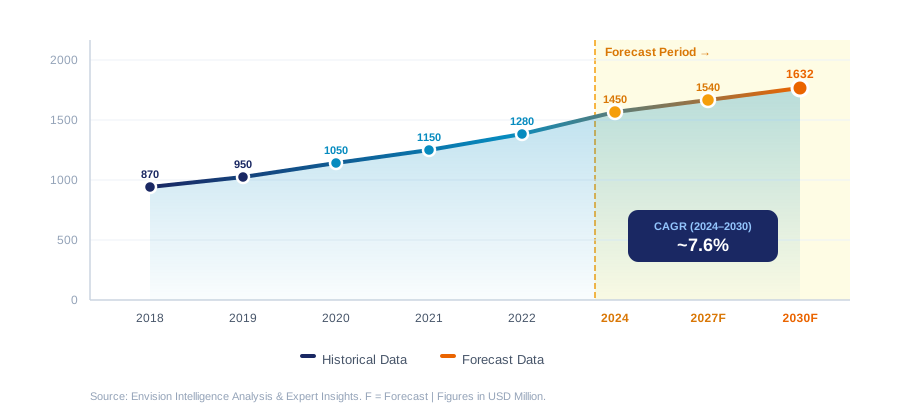
Expected CAGR
~7.6%
2026-2035
An executive summary condensing the whole report such that essential authority can rapidly twist up doubtlessly acquainted with brief overview and conclusion.
To have complete market analysis, industry value chain analysis, Porter’s Five Force Analysis, PESTLE, SWOT analysis, and Y-o-Y analysis were carried to understand the market more comprehensively.
Regional and global Diversity is analysed with the major countries and the unions. Scrutinizing the revenue generation on Year-On-Year
Identifying DROC in the current market and their impact in altering the market dynamics.
Competitive landscape analysis to identify the mergers and acquisitions which will have a comparative financial analysis with major competitors.
Expertise investment opportunities by an analyst to the individual and organisation to have a better foothold in the market.
The major key players in the South America Cardiovascular Devices Market are:
South America Cardiovascular Devices Market
Along with these companies, there were many other companies considered/cited in the report while analysing the South America Cardiovascular Devices market. These companies hold substantial share-owning to the nature of the industry whereas rest of the market shares are marginal chunks to regional and local level manufacturers. Other players have considerable presence owing to its robust brand image, geographical reach and strong customer base.
South America Cardiovascular Devices Market
Market Size Available | 2018 - 2035 |
Base Year | 2025 |
Forecast Period | 2026-2035 |
Historical Period | 2018-2025 |
Segments Analysed | By Type, Application, and Region |
Analyses Covered | Global, Regional & Country Level; Segment Analysis; Drivers, Restraints, Opportunities, Challenges; PESTLE; Porter's Five Forces; Competitive Landscape |
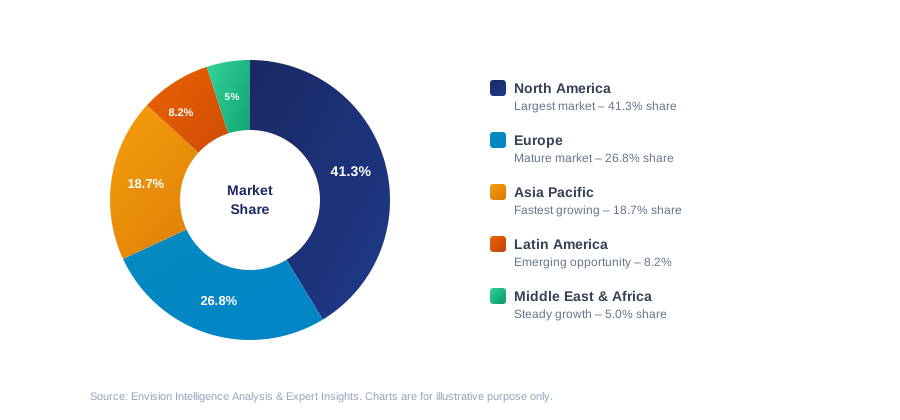
Regions Covered | North America · Europe · Asia Pacific · Latin America · Middle East & Africa |
Report Formats | Extensive Report (350 pages) | Snapshot Report (85 pages) |








Starting from $2700

Starting from $2160

Starting from $2700
Keep up-to-date with our weekly newsletter, Media Pulse.

Data-driven market insights & solutions


